
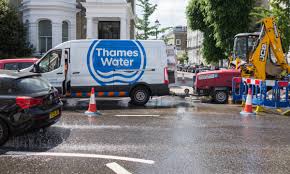
Thames Water Sinks Deeper Into Crisis With £1.6B Loss — Turnaround Could Take 10 Years, CEO Admits
Thames Water, the UK’s largest water utility, has reported a staggering £1.6 billion loss for the fiscal year ending 31 March 2025 — a sharp reversal from its £154 million profit the year prior. The firm now faces a monumental financial and operational challenge that its CEO, Chris Weston, says could take at least a decade to fix.
As the company reels under £20 billion in debt, mounting regulatory pressure, and worsening pollution metrics, a creditor-driven recapitalisation plan is underway to avoid collapse or even temporary nationalisation.
From Profit to Massive Loss: What Went Wrong?
Despite an 8.7% increase in revenue to £2.7 billion, the utility’s financials plunged into the red — not from operations alone but from a perfect storm of structural and one-off issues.
Key Drivers of the £1.6 Billion Loss:
-
£1.27 billion write-down on a loan from its parent company, deemed unrecoverable
-
£285 million in financing costs
-
£122 million in regulatory fines
-
£65 million in advisory fees
-
£33 million in turnaround-related expenses
In a statement, Weston acknowledged that “recapitalisation is essential” and will only succeed with the buy-in of multiple stakeholders, including regulators, creditors, and political actors.
“This will come with a requirement to re-set the regulatory landscape and acknowledge it will take at least a decade to turn Thames around,” Weston said.
The Long Road to Recovery: A Decade of Structural Overhaul
Thames Water’s path to stability hinges on a multi-pronged strategy:
1. Recapitalisation by Senior Creditors
The current plan involves senior lenders taking control, restructuring debt obligations, and likely injecting fresh capital. But this depends on regulatory consent and political stability around water sector governance.
2. Operational Performance Gains
Despite financial turbulence, Thames Water claims some operational wins:
-
Leakage reduced by 13.2%
-
Customer complaints down 16.6%
-
Sewer maintenance efforts expanded
However, these modest gains have been overshadowed by a 36% rise in pollution incidents, which totaled 470 in the past year.
Blame It on the Rain? Environmental Failures Under Scrutiny
Weston attributed the spike in pollution events to “rainfall and high groundwater levels”, stating that these factors negatively impacted the company’s already stretched systems.
“While it is disappointing this work was not reflected in performance improvement in the year, we are confident that it will translate into future environmental performance.”
Still, that message may fall flat with regulators and the public, who are increasingly frustrated by Thames Water’s recurring failures, especially in environmental performance. With public concern growing around water quality and climate resilience, Thames faces intensified scrutiny.
“Going Concern” Warning: Survival Now Tied to Creditor Cooperation
The utility’s annual report included a sobering note: a “going concern” warning — essentially an admission that the company’s ability to operate in the next 12 months hinges on the successful completion of the recapitalisation transaction.
“The directors expect that for the recapitalisation transaction to be agreed, the company will require the support of multiple stakeholders including its creditors,” the report noted.
This suggests that financial risk remains immediate, even as longer-term turnaround plans are formulated.
Leadership in Crisis Mode
For CEOs and business leaders watching this unravel, the Thames Water crisis is a masterclass in risk mismanagement, capital structure imbalance, and regulatory disconnect.
What Can Executives Learn?
1. Leverage Requires Guardrails
Operating with a £20 billion debt load may have once seemed viable in a low-interest environment, but the shift in macro conditions has exposed structural weakness. Leaders must align capital strategy with operational resilience.
2. Crisis Leadership Requires Transparency
Chris Weston’s admission that the turnaround could take a full decade may not inspire short-term investor confidence, but it signals realistic leadership. CEOs navigating long-haul recoveries must balance hope with hard truths.
3. ESG Isn’t Optional — It’s Core
The company’s failure to curb pollution amid rising consumer and regulatory scrutiny reflects a misalignment with ESG expectations. Environmental risks are no longer PR problems — they’re financial and legal liabilities.
4. Stakeholder Management is Everything
Turnarounds of this magnitude require alignment across regulators, creditors, staff, and the public. Thames’ survival now depends not just on internal execution but on its ability to broker compromise across complex stakeholder ecosystems.
Is Nationalisation Inevitable?
With financial fragility, regulatory ire, and operational underperformance converging, speculation about a temporary government takeover continues to swirl. While ministers are reluctant to intervene, a public collapse of a critical water utility could force the government’s hand.
Even the recapitalisation plan, while necessary, may only provide a stopgap if longer-term governance and infrastructure reforms aren’t delivered swiftly.
The Cost of Delay, the Price of Reform
Thames Water’s decade-long turnaround isn’t just about fixing pipes or plugging leaks. It’s about rebuilding public trust, aligning capital with purpose, and delivering essential services without cutting environmental corners.
This crisis is a wake-up call for the broader utilities sector: financial engineering cannot substitute operational excellence, and regulatory tolerance has limits.
For investors, governments, and other utility firms: watch Thames Water closely — this is a canary in the coal mine for infrastructure under stress.