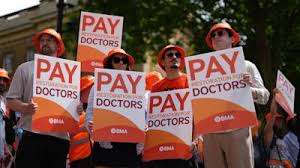
A Health Crisis Turned Pay Dispute
Resident doctors across England are gearing up for a five-day strike starting 25 July, escalating tensions between the British Medical Association (BMA) and the newly elected Labour government. At the heart of the dispute: a 29% pay rise demand, which the BMA insists is not excessive, but merely a realignment to pre-2008 salary levels—adjusted for inflation.
As the Health Secretary Wes Streeting prepares for urgent negotiations with BMA leaders this week, the stakes are high. If no agreement is reached, the strike could derail the NHS’s fragile post-Covid recovery, hitting patient care, elective surgeries, and emergency staffing across England.
“We are still down compared to even the pandemic in 2020,” said Dr. Emma Runswick, a Greater Manchester resident doctor and BMA Council Deputy Chair, in an interview with BBC Radio 4.
Why 29%? Unpacking the Numbers
Inflation, RPI vs CPI, and the doctors’ case for restoration—not reward
The BMA’s demand is based on the Retail Prices Index (RPI) rather than the Consumer Price Index (CPI)—a choice that’s drawn political scrutiny. RPI is typically higher and no longer used by the Office for National Statistics as an official measure. But the union argues that RPI still defines key costs in workers’ lives.
“The government uses RPI when it suits them,” Runswick said, referencing how train fares, car taxes, and student loan interest are all pegged to RPI. “So it’s fair to use it when we calculate our pay erosion.”
The union claims that resident doctors (formerly known as junior doctors) have lost nearly a third of their pay value since 2008, when inflation outpaced pay growth. The 29% figure, says BMA Chair Dr. Tom Dolphin, is not a raise—but a return to parity.
“This isn’t new money—it’s the money we lost,” said Dolphin. “It’s a correction, not a gain.”
The Labour Government’s Tightrope
Balancing affordability with expectations after years of Tory silence
The Labour government faces its first major industrial test since coming to power. Unlike the Conservatives, who were frequently accused of stonewalling public sector workers, Labour leaders have pledged to rebuild trust through dialogue and respect.
But fiscal limitations remain.
“Public sector pay must be affordable in the context of the broader economy,” said Chief Secretary to the Treasury Darren Jones. “We’ve honoured pay review body recommendations, and we’ve been transparent about what’s possible.”
Jones was quick to contrast the government’s stance with that of its predecessors, highlighting that under the Tories, “they weren’t even talking to public sector workers.”
Still, affordability will remain the mantra for the Treasury, especially with other unions—like the Royal College of Nursing—closely watching these negotiations.
A Deal Interrupted: The 22% That Wasn’t Enough
BMA says earlier agreement was the start—not the finish
Last year, the BMA negotiated a 22% pay increase over two years, a deal many expected to continue progressing toward full restoration. Instead, the union says the government abruptly paused the process.
“We thought we were on a journey,” said Dr. Dolphin. “Now it feels like we’ve been left marching on the spot.”
The sudden halt has inflamed tensions and triggered calls for stronger action, leading to this month’s unprecedented five-day strike.
What’s at Stake: NHS Recovery in the Crosshairs
Delayed care, understaffed hospitals, and rising public concern
The timing of the strike is critical. After years of Covid-related disruptions, the NHS is under immense pressure to clear backlogs, reduce wait times, and rebuild public confidence. A five-day walkout by resident doctors—who form the backbone of hospital rotas and on-call systems—could cripple care delivery.
The government knows it. The BMA knows it. And the public will be watching closely.
Meanwhile, trust between the NHS workforce and the government remains shaky. The symbolic memory of “Clap for Carers”—a weekly applause ritual during lockdown—still lingers. But many doctors now see those gestures as hollow, especially when their real-terms pay has continued to decline since the pandemic.
“Our reward for fighting through Covid is a pay cut?” said Runswick. “That’s not what we expected when people lined the streets to clap.”
Strategic Implications for Healthcare Leaders
-
Retention Crisis Ahead: If pay disputes remain unresolved, NHS staff attrition—already rising—will accelerate.
-
Benchmark Precedent: A 29% concession could set a benchmark for other public sector demands, including nurses, teachers, and civil servants.
-
Policy Reputation at Risk: Labour must balance long-term reform with short-term credibility. This negotiation will set the tone for its entire NHS agenda.
-
Review Mechanisms Under Scrutiny: The relevance of pay review bodies and their independence is being questioned—potentially triggering systemic changes.
-
Inflation Metrics in Pay Policy: The RPI vs CPI debate may reshape how inflation is incorporated into future public sector pay negotiations.
Can Dialogue Prevent Disruption?
As the BMA and Health Secretary Wes Streeting enter this pivotal week of negotiations, the outcome will determine more than just doctor salaries—it will test the Labour government’s ability to lead a fractured public sector, set expectations for other unions, and reaffirm or undermine its promise of “change.”
The doctors are clear: they’re not asking for a raise—they’re demanding economic justice. For the government, the challenge lies in balancing that moral argument against a fragile fiscal landscape.
With just days left before the NHS faces its most significant strike action of the year, both sides will need to weigh more than numbers. They’ll need to consider trust, precedent, and the long-term health of both Britain’s doctors and its democracy.