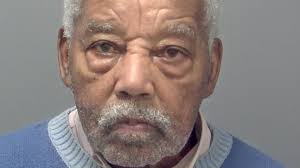
In what is believed to be the oldest cold case ever solved in modern English policing history, a 92-year-old man has been sentenced to life in prison for the brutal rape and murder of Louisa Dunne in 1967.
The man, Ryland Headley, was handed a life sentence with a minimum term of 20 years by Mr Justice Sweeting, who told the court, “You will never be released – you will die in prison.”
A Cold Case Frozen in Time
The crime dates back to 58 years ago, when Louisa Dunne, a 75-year-old widow and mother of two, was attacked in her own home in the Easton area of Bristol. Dunne, born in 1892 and once an active participant in the labour movement, had been living quietly off her pension at the time of her death.
After committing the horrific crime, Headley fled the region, reportedly spending time in London before settling in Ipswich, Suffolk — where his violent tendencies would resurface.
The Courtroom’s Damning Verdict
Presiding over the case, Mr Justice Sweeting described Headley as a “cruel, depraved, pitiless man”, saying his actions showed “complete disregard” for Louisa Dunne’s life and dignity. The judge recounted how Dunne was subjected to extreme violence during the assault and suffered intense pain and fear.
“You met her screams with force,” Sweeting told Headley.
“You thought you had escaped justice — but science and determination caught up with you.”
A Pattern of Violence: The Ipswich Attacks
The Bristol murder wasn’t Headley’s only crime. A decade after killing Louisa Dunne, in 1977, Headley raped two elderly women, aged 79 and 84, in their homes in Ipswich. He was convicted and sentenced to life at the time, but in a shocking turn of events, his sentence was reduced.
During his appeal, doctors argued that his violent outbursts stemmed from sexual frustration caused by his marriage to an “ambitious and demanding” wife. This defense led to a reduced sentence — and Headley served only two years in prison for those rapes.
The DNA Breakthrough That Changed Everything
The breakthrough came in 2023, when Avon and Somerset police reopened the cold case as part of a wider review of unsolved crimes. Investigators sent off Dunne’s preserved clothing and hair samples for advanced DNA testing.
Forensic scientists successfully retrieved a full DNA profile from the items — a match was found in the national DNA database. Headley’s DNA had been recorded in 2012, when he was arrested (but not charged) in connection with an unrelated case.
That match led to his arrest and, ultimately, his conviction.
A Historical Sentencing Challenge
Sentencing someone for a crime committed in 1967 isn’t straightforward. Prosecutor Anna Vigars KC pointed out how legal and societal norms were vastly different at the time. For example, the death penalty was still in effect in certain cases, and minimum terms were set by the Home Secretary, not judges.
Despite these factors, Vigars recommended a starting point of 20 years — which aligns with sentencing guidelines from the late 1960s for murders with a sexual element. Today, such a crime might warrant a 30-year minimum term.
The Oldest Killer Ever Convicted in the UK
With his conviction, Ryland Headley becomes the oldest person in the United Kingdom ever convicted of murder. He turns 93 this September. His defense lawyer, Jeremy Benson KC, urged the court to consider Headley’s conduct since his release in 1980, but the plea had little sway.
The judge emphasized the “intergenerational trauma” inflicted by the murder, citing its enduring effect on Dunne’s family and the broader community.
Police and Forensics Praised
Mr Justice Sweeting commended the “diligent and tireless” work of police, prosecutors, and forensic experts. Their commitment to pursuing justice — even decades after the crime — served as a reminder that no case is too cold to solve, especially in an era of rapidly advancing forensic science.
The conviction of Ryland Headley offers a bittersweet form of closure to a case that haunted Bristol for over half a century. While Louisa Dunne’s life was stolen in the most violent way, and justice delayed by decades, her story has finally been heard in court — and her killer will never walk free again.
This historic conviction is not only a victory for law enforcement and forensic science but also a stark reminder that justice can catch up, no matter how long it takes.