Alarming July PMI Data Signals Deepening Economic Strain, Mounting Pressure on Labour Government
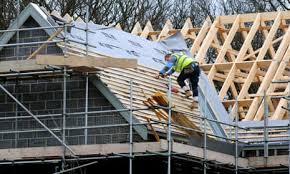
The UK construction sector has just suffered its steepest decline since May 2020, the height of the Covid-19 pandemic, raising serious doubts about the Labour government’s ability to deliver its pledge of building 1.5 million new homes.
According to new figures from S&P Global Market Intelligence, construction activity collapsed in July, primarily due to a sharp contraction in housebuilding, coupled with a significant downturn in civil engineering and a softer, but still worrying, slowdown in commercial development.
This stark fall is now ringing alarm bells inside Number 10, the Treasury, and at the Bank of England, as policymakers brace for a possible interest rate cut amid escalating signs of economic fragility.
Housebuilding Crumbles
Residential Projects Dry Up Amid Economic Uncertainty
The latest Purchasing Managers’ Index (PMI)—a closely watched indicator of activity based on a survey of about 150 construction firms—shows that residential building led the sector’s collapse.
This is particularly damaging for Labour, which made housing a central promise of its platform, vowing to build 1.5 million homes during its term.
But the data suggests the opposite is happening:
-
Developers are pulling back
-
Project pipelines are drying up
-
Demand is weakening amid consumer caution and rising build costs
“Anecdotally, companies reported a lack of tender opportunities and a hesitancy from customers to commit to projects,” said Joe Hayes, principal economist at S&P Global Market Intelligence.
Civil Engineering and Commercial Projects Also Slide
Infrastructure Investment Stalls Despite Government Commitments
Civil engineering—often considered a reliable indicator of public investment—also saw a sharp drop, raising concerns that government-funded projects are either being delayed or deprioritized.
Meanwhile, the commercial sector recorded a more modest slowdown, but still added to the overall decline.
This three-pronged slump underlines a wider crisis of confidence:
-
Uncertainty over future interest rate policy
-
Waning foreign investment
-
Impact of Trump’s new global tariffs, which have disrupted material imports and trade flows
Market Signals: A Looming Rate Cut?
Bank of England Expected to Act as Recession Risks Grow
With the construction sector shrinking and the wider economy showing weakness, the Bank of England is under pressure to act. Financial markets are now pricing in a 95% chance of a 0.25% rate cut this week.
Contributing macroeconomic headwinds include:
-
Two consecutive months of negative GDP growth (April & May)
-
Sticky inflation that refuses to ease quickly
-
Rising unemployment
-
Global trade disruptions due to U.S. import tariffs
If the central bank cuts rates, it will be a clear signal that policymakers believe the UK is teetering on the edge of a technical recession.
Labour’s Housing Pledge on Shaky Ground
Can the Government Still Deliver 1.5 Million New Homes?
For Prime Minister Keir Starmer, the construction data is a political landmine. His government’s flagship promise to solve Britain’s housing crisis by ramping up building activity is now directly contradicted by the industry’s real-time performance.
Even before the July collapse, critics warned that:
-
Planning bottlenecks
-
Labour shortages
-
Material costs
-
And NIMBY opposition
…would make the 1.5M target a monumental challenge.
Now, with developers pulling back and investment pipelines drying up, even reaching half that target could prove difficult.
“Forward-looking indicators from the survey imply that UK constructors are preparing for challenging times ahead,” warned S&P’s Joe Hayes.
Global Pressures Add Fuel to the Fire
Trump’s Tariffs and International Volatility Compound UK’s Woes
The UK construction sector isn’t operating in a vacuum. External pressures are making matters worse:
-
The new wave of U.S. tariffs under Donald Trump is already choking global supply chains, making building materials more expensive and scarce.
-
Ongoing geopolitical tensions in Europe and the Middle East are increasing uncertainty around commodity prices and investment flows.
-
Investors are retreating from long-term property commitments in a high-risk, high-inflation environment.
These macroeconomic shocks are further chilling construction appetite, especially for large-scale housing or infrastructure ventures.
PMI Drop as Leading Indicator
Why This Data Should Terrify CEOs and Policymakers
The Purchasing Managers’ Index (PMI) is considered a leading economic indicator because it captures sentiment and business conditions ahead of official statistics.
A steep drop in construction PMI is often a precursor to broader economic trouble, as it signals:
-
Falling investment confidence
-
Cashflow pressures on firms
-
Shrinking order books
This isn’t just about concrete and cranes. It’s a warning sign for:
-
Banks and lenders exposed to property markets
-
Retailers relying on growth corridors
-
Local governments counting on construction-led job creation
What Can Be Done?
Urgent Need for Policy, Incentives, and Public-Private Cooperation
To avoid a deeper collapse in construction, industry leaders are calling for:
-
Fast-track planning reforms
-
Tax incentives for residential developers
-
Public-private housing partnerships
-
Accelerated rollout of infrastructure projects
-
Government support for modular and green housing innovation
Without decisive action, the UK risks not only missing its housing targets but also sliding into a deeper economic funk.
A Wake-Up Call for Westminster
The latest collapse in UK construction activity should serve as a red flag for the government, investors, and voters alike. The Labour administration’s credibility on housing, economic recovery, and infrastructure delivery is now under direct threat.
If the government fails to respond swiftly—with policy, funding, and regulatory reform—it won’t just miss its 1.5 million homes goal. It could find itself presiding over the worst construction slump since the pandemic and a deepening national economic crisis.