Revelations Spark Accusations of Evidence Tampering, Calls Grow Louder for Public Inquiry
In a development that has reignited anger over one of the UK’s most controversial moments in labor history, it has been revealed that Northumbria Police destroyed documents believed to include a critical report on a violent truncheon attack at the 1984 Orgreave miners’ strike.
The report is thought to have related to an incident involving PC Martin, a Northumbria officer who was filmed striking a picketing miner, Russell Broomhead, multiple times over the head with his truncheon—footage that was broadcast on ITV News at 10 and shocked the nation.
The destruction of the documents, just months before the 2024 general election (widely expected to bring Labour—and their promise of a full Orgreave inquiry—into power), has prompted accusations of a deliberate cover-up.
The 1984 Orgreave Incident – A Defining Moment in Modern Industrial Conflict
What Happened at Orgreave?
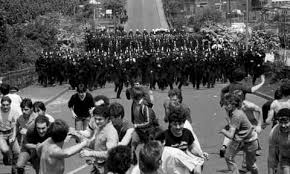
On 18 June 1984, roughly 8,000 miners assembled at the Orgreave coking plant in South Yorkshire for a mass picket during the National Union of Mineworkers’ (NUM) strike. They were met by an overwhelming force of 4,500 police officers, including units from Northumbria and other constabularies.
What followed was one of the most violent confrontations of the strike, with police officers charging on horseback and using truncheons on picketers. The event was not only chaotic but also seen by many as symbolic of the Thatcher-era crackdown on unionized labor resistance.
The Beating Captured on Camera
PC Martin and the Assault on Russell Broomhead
Among the many violent incidents that day, one stood out: PC Martin of Northumbria Police repeatedly striking Russell Broomhead with a truncheon. The shocking footage became a focal point of national outrage and a symbol of excessive police force.
What has now come to light, thanks to 2016 correspondence from then-Chief Constable Steve Ashman to Parliament, is that a superintendent’s report did exist. This document:
-
Acknowledged the incident involving a PC striking a picketer
-
Confirmed the officer had been “reported” for assault to the Director of Public Prosecutions (DPP)
-
Noted the DPP declined to pursue prosecution
Despite this, no charges were brought and the officer, during a police interview, defended his actions by implying that senior officers encouraged aggressive behavior.
Document Destruction Sparks Outrage
Two Boxes of Orgreave Documents Destroyed
In April 2024, Northumbria Police destroyed two boxes of documents related to their role in the Orgreave operation—despite previously acknowledging their existence. The documents, which included the superintendent’s report about the truncheon incident, were discarded under internal procedures citing the Data Protection Act 2018.
Timing Raises Serious Questions
The disposal took place just months before the UK general election, raising suspicions that it was intended to evade accountability before a Labour-led inquiry could begin.
“It’s unbelievable that the police can throw that document away, without asking me and people it affects,” said Russell Broomhead, the miner who was struck by PC Martin.
Calls for Accountability and Legislative Change
Orgreave Truth and Justice Campaign Speaks Out
Kate Flannery, Secretary of the Orgreave Truth and Justice Campaign (OTJC), condemned the action:
“Any destruction of important information relating to violent police attacks means that crucial evidence is no longer available to an Orgreave inquiry.”
The campaign has long pushed for an official inquiry into both the police violence on that day and the subsequent collapse of criminal prosecutions against 95 miners, many of whom were falsely accused of riot and unlawful assembly.
Legal and Archival Experts Demand Reform
The Archives and Records Association has joined the call for reform, urging the government to legislate protections for police records. Ruth MacLeod, the association’s chair, warned:
“Many people have no idea that police records, which are important for accountability, can be so easily destroyed.”
What’s Next? Police Launch Internal Investigation
Following public backlash and political criticism—including from Labour MP Ian Lavery—Northumbria Police have now opened an internal investigation into the destruction.
“We very much recognize the strength of feeling and concern within our communities,” a force spokesperson said. “We are carrying out an investigation into the circumstances around the disposal of the material.”
Still, critics are skeptical that a police-led review will deliver the transparency and justice that many, including Broomhead and the OTJC, have waited decades for.
Broader Implications for Police Transparency in the UK
This case once again highlights the fragile state of accountability mechanisms in British policing. Unlike national archives or judicial records, police forces have broad discretion over what historical documents they retain or destroy.
For CEOs, legal professionals, and civic leaders, this incident is a case study in the risk of opaque institutional behavior—especially when data retention intersects with public trust and historical justice.
Will Truth Ever Be Known?
The destruction of these documents may have erased critical insight into one of the most infamous incidents of police brutality in modern British history. For victims like Broomhead, and for the nation at large, this represents a profound failure of institutional memory.
In an era where calls for truth, transparency, and justice are louder than ever, the Orgreave saga remains unresolved—and the stakes have only grown.