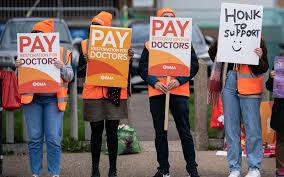
NHS on the Brink: Massive Resident Doctor Strike Threatens to Derail Healthcare Recovery Plans
Six-Month Walkout Could Cancel Hundreds of Thousands of Surgeries and Appointments
London, The UK’s National Health Service (NHS) faces an unprecedented disruption as resident doctors (formerly junior doctors) prepare for potential six months of rolling strikes, risking a healthcare backlog spiral and testing the newly elected Labour government’s resolve.
A ballot by the British Medical Association (BMA)—representing 55,000 resident doctors—closes today, and NHS officials are bracing for a “yes” vote that could result in the largest sustained wave of doctor-led industrial action in UK history.
If approved, the strikes would begin this month and extend through winter into January 2026, placing immense pressure on an already strained system trying to meet its pledge to cut hospital waiting lists and restore 18-week treatment targets by 2029.
Why Resident Doctors Are Threatening to Strike
At the heart of the dispute is a 29% pay restoration demand, aimed at reversing what the BMA says is a 23% real-terms erosion of doctor salaries since 2008.
Last year, shortly after Labour took power, Health Secretary Wes Streeting granted a 22% pay rise covering 2023–2025, which temporarily ended a year-long strike wave that had disrupted NHS operations for 44 days between March 2023 and July 2024.
But that ceasefire has unraveled. This year, resident doctors were offered a 5.4% raise—the highest in the public sector—but the BMA deemed it “derisory” and inadequate to fix long-standing pay disparities.
“By voting yes, they will be telling the government there is no alternative to fixing pay,” said BMA resident doctors committee co-chairs Dr Ross Nieuwoudt and Dr Melissa Ryan. “This cannot wait for different fiscal circumstances and a healthier NHS.”
The Consequences: Mass Cancellations, Delays, and Systemic Strain
Health leaders warn that renewed strikes would have dire effects on both patients and frontline staff. Danny Mortimer, CEO of NHS Employers, said:
“The last thing health leaders want is more industrial action, which will likely lead to tens, if not hundreds of thousands of appointments and operations being cancelled.”
Past strikes by resident doctors forced NHS trusts to cancel non-emergency surgeries, outpatient clinics, and diagnostic appointments on a massive scale. Mortimer added that the timing could not be worse:
“While we fully understand the genuine grievances, going on strike will have a huge impact on the NHS and patients.”
Streeting’s Plea and the Government’s Dilemma
Wes Streeting, who has led Labour’s NHS reform agenda, is acutely aware of the stakes. In a May op-ed in The Times, he urged doctors to refrain from returning to strikes:
“We can’t afford to return to a continuous cycle of standoffs, strikes and cancellations.”
Despite his plea, insiders suggest the BMA leadership has galvanized support behind the strike, with reports that many resident doctors are “excited to go again,” according to Dr Nieuwoudt.
Can the Government Afford a Standoff?
The Department of Health and Social Care (DHSC) has emphasized its willingness to work with unions but insists progress has already been made:
“We are on a journey to improve conditions for resident doctors,” said a DHSC spokesperson. “They have received a 28.9% cumulative pay increase over three years, the highest in the public sector.”
The government is also touting its 10-year NHS plan, which includes:
-
Cutting administrative bureaucracy
-
Expanding technology adoption
-
Accelerating training reform
-
Prioritizing clinical time over paperwork
Still, these initiatives offer long-term relief, while the current crisis demands immediate resolution.
Mounting Pressure From Inside and Outside the System
While the BMA is pressing its case for full pay restoration, NHS leaders, patients, and some within government are sounding alarm bells about the reputational and operational damage of continued strikes.
Rachel Power, CEO of the Patients Association, noted:
“We must ask how the NHS can rebuild public trust amid continued industrial action. The government and the BMA must find a solution urgently.”
Daniel Elkeles, CEO of NHS Providers, warned of a “productivity reversal” if strikes proceed:
“Trusts will spend more time dealing with disruption than improving patient care.”
There are also concerns about doctor morale and training standards, which the government is addressing through a comprehensive review already underway.
What’s at Stake: Political, Financial, and Human Costs
The Labour government made fixing the NHS a cornerstone of its electoral mandate. However, the political optics of a prolonged doctor strike could be damaging.
-
The NHS backlog remains in the millions.
-
Patient confidence is fragile after COVID-era disruptions.
-
The winter months historically bring peak pressure on hospital services.
With both sides dug in—resident doctors demanding equity, and the government claiming fiscal responsibility—the outcome of Tuesday’s ballot could define the next phase of healthcare reform in the UK.
A Tipping Point for the NHS
The upcoming strike ballot is more than a union vote—it is a referendum on the future of the NHS workforce, and the government’s ability to negotiate, reform, and lead.
Whether Streeting’s reformist ambitions can survive this standoff depends not just on fiscal policy—but on how quickly trust can be restored between Westminster and the healthcare professionals who power the NHS.
If no compromise is found, the UK could face a season of disruption that delays recovery, erodes public trust, and risks pushing even more doctors to leave the profession altogether.